


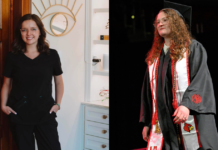


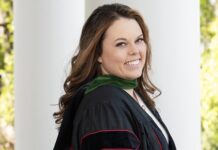




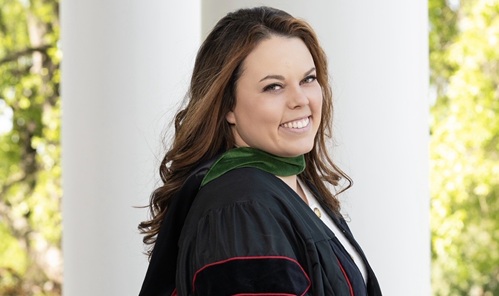
For Courtney Shepard, vice president of the University of Louisville School of Medicine class of 2026, giving to the new Health Sciences Building is a way of honoring those who shaped her medical education.
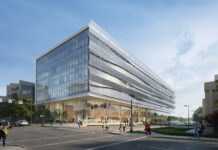
In gratitude for the physicians, alumni and healthcare professionals who helped create the experience she and her classmates received at the School of Medicine, Shepard and her fellow Class of 2026 graduates are returning the favor with a class gift that will support the new Health Sciences Building expected to open in 2029.
The gift helps create new opportunities for future students, the patients they will serve and the communities they will impact.
“One of the most meaningful parts of being a UofL School of Medicine alumnus is recognizing that the education we received was made possible by so many people who came before us,” Shepard said. “From the stethoscopes we were gifted at orientation to the buildings we learned in and the education we received, so much of our experience was made possible through the generosity of previous generations of physicians and healthcare professionals who believed in us enough to invest in our future.”
The class gift allows future students to have access to an environment designed not only for today’s learning, but for the rapidly changing field of medicine. Throughout medical school, Shepard and her classmates saw firsthand how the learning environment can influence the way students’ study, connect and prepare for clinical practice. Medical education, she noted, is shaped as much by relationships and shared problem-solving as it is by lectures and exams.
“I hope it gives students an environment that encourages them to learn together and grow together,” Shepard said. “Medical school is a unique period, filled with challenges, new experiences and relationships that can shape who we become both personally and professionally.”
Although she graduated before it opens, Shepard believes the new building represents an opportunity to strengthen the kind of collaborative learning that is essential to medicine. She hopes students will find more opportunities for hands-on training, connection with faculty and peers and exploration of emerging areas that are already reshaping clinical practice, including artificial intelligence, gene therapies and personalized treatments.
As medicine continues to evolve, Shepard said future physicians will need to adapt to new technologies, work across disciplines, communicate effectively and think critically in moments of complexity and change.
“Modern medicine now requires physicians who can do more than simply retain information,” Shepard said. “It is constantly evolving, with new treatments, new protocols and new expectations of care every day.”
Their gift is also a reflection of continuity. Shepard described giving back as becoming part of a cycle: students benefit from the vision and generosity of those who came before them, then carry that influence into their own careers and communities.
“As physicians, we are only as successful as the training we receive,” Shepard said. “The physicians who taught us, influence the way we practice, and the students coming behind us will eventually influence the patients and communities they serve in much the same way.”
Shepard said she may never know the names of the students who will study in the new building, but knowing her class helped create an opportunity for them is deeply meaningful. She hopes those future students will one day find their own ways to continue the tradition of giving back.
“Ultimately, I’d hope to know that the investment we made wasn’t simply in a new building, but in the people who passed through it and the patients and communities they will eventually serve,” Shepard said. “That’s the impact I’d want to see.”