


























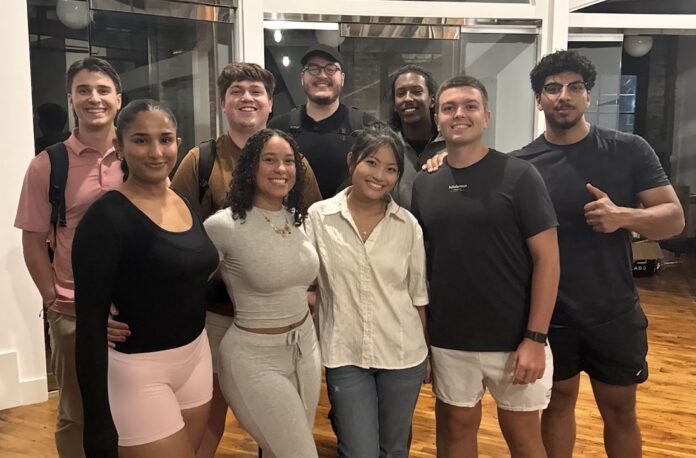
Enterprising students at the University of Louisville are using Cardinal Intelligence to develop software applications employing artificial intelligence (AI) that improve student performance and help Etsy sellers use social media more efficiently to market their businesses. They gained support in developing and commercializing their projects through Sandbox, a specialized class offered by the UofL College of Business.
Ethan Havertape and Nate Royal developed Due Gooder, an AI-powered application designed to help college students stay organized and manage their coursework. Fed with users’ syllabi or learning management system information (such as Blackboard), Due Gooder can help students manage their work and plan for class deadlines.
Royal, a senior majoring in computer science in J.B. Speed School of Engineering, and Havertape, a junior majoring in CIS in the College of Business, employ AI both within the software programming and in their business operations.
“Within the app, we’ve developed ‘Duey,’ a personal AI assistant that understands students’ class schedules, assignments and coursework context. Duey can help students plan study blocks, answer questions about syllabus policies and assist with schedule-related decisions,” Havertape said.
The system includes adaptive AI learning tools that generate flashcards and practice tests from the student’s notes, slides and coursework. It even identifies areas where the student needs improvement and adapts the study resources to strengthen those skills.
“Beyond the product, we use AI heavily across coding, operations, marketing and internal business workflows to increase efficiency,” Royal said.
The team gained support and mentoring for the project through Sandbox, a year-long class that guides students as they navigate the process of developing software businesses.
“Since entering Sandbox, we’ve grown from only a few hundred users to tens of thousands of student signups across thousands of universities, taken on investment and expanded into university research pilots focused on student engagement, persistence and retention,” Havertape said.
First offered during the 2025-26 year, UofL’s Sandbox chapter gave the student teams the opportunity to network with mentors and other Sandbox teams from across the U.S. The class allows students to form interdisciplinary groups to identify and validate software products, sell them and seek venture financing. The students retain 100% of the equity in any company they build as part of Sandbox.
Sandbox is for entrepreneurial students in any area of study, whether or not they are technologically trained, said Jack Manzella, entrepreneur in residence and instructor for the course.
“Students with a desire to experience a startup team and develop a software business can benefit from spending a year in Sandbox,” Manzella said. “The resources and national networking opportunities available to Sandbox students help them lay a solid foundation and actually work through the steps to launch a business.”
Havertape and Royal said Sandbox gave them a distinct advantage in growing their idea.
“You do not need to already have a startup or even know exactly what you want to build,” Havertape said. “Sandbox gives students the opportunity to learn entrepreneurship from the ground up while being surrounded by people who are motivated to create and solve problems. The more effort and energy you put into the program, the more valuable the experience becomes.”
AI tool for Etsy sellers
Stephanie Sithu, another Sandbox alum, advanced her AI marketing tool, BeforeMe, through the class. Born out of a need to enhance her own Etsy business, BeforeMe is for Etsy sellers who want to grow their business on Pinterest. It generates pins from the user’s Etsy listings and schedules them.
In developing BeforeMe, Sithu engaged with both platforms’ tech teams and refined her marketing approach through Sandbox.
“I worked directly with both the Pinterest and Etsy API teams to build it. AI is central to BeforeMe in two ways: using Gemini to generate optimized pin copy and building my own heuristic AI layer that adapts scheduling based on which pins are gaining traction and what audience intent (shopping, lifestyle, gift-giving, solutions) they serve,” Sithu said.
The 2026 Speed School graduate in computer science said the structure of the Sandbox course was just what she needed.
“The customer discovery framework helped me stop guessing and start finding the real, specific problems Etsy sellers face with Pinterest marketing, which directly shaped the features I built,” Sithu said. “The lineup of industry speakers walked us through every stage of building something real, and I especially enjoyed the branding sessions. The pitching process was also humbling in the best way. I revised my pitch up to the final day, and by the end it felt genuinely like me, not a rehearsed product-benefit script.”
About Cardinal Intelligence
Cardinal Intelligence empowers the University of Louisville to lead and learn in the age of artificial intelligence (AI) with human-centered guidance and responsibility. For generations, Cardinals have embraced technology, expanding how we learn, discover, connect and work. While AI raises important questions, our students, faculty, researchers and staff bring the curiosity and innovation needed to find answers. Through Cardinal Intelligence, we are shaping how UofL uses AI to advance our university and uncover solutions that strengthen the communities we serve.