






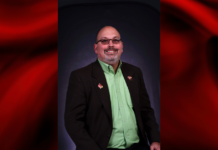





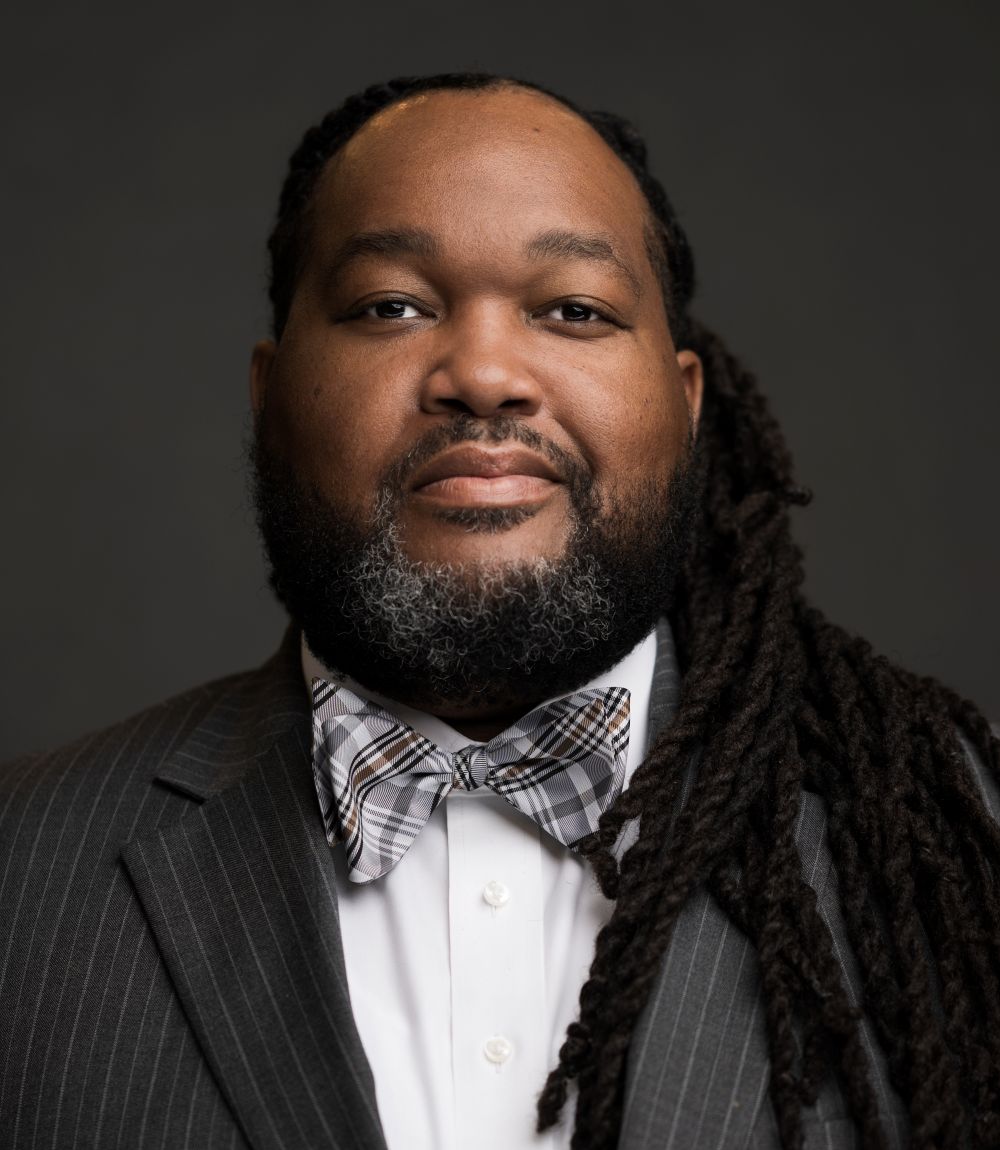
Floyd Craig said his family so values education that he remembers playing “school” with his sister in the summer while his friends played outside. The University of Louisville alumnus and Jefferson County Public Schools (JCPS) educator said despite that, he could never really envision himself becoming a teacher or attending college – until he found Upward Bound.
Mission in action
For more than five decades, The federal TRIO Talent Search and Upward Bound programs at UofL have helped first-generation and income-eligible students access higher education through academic support, mentoring, college exposure and leadership development.
In fact, since the 1960s, more than 200 UofL graduates, many with advanced degrees, have participated in the Upward Bound program. Craig is one of those former students.
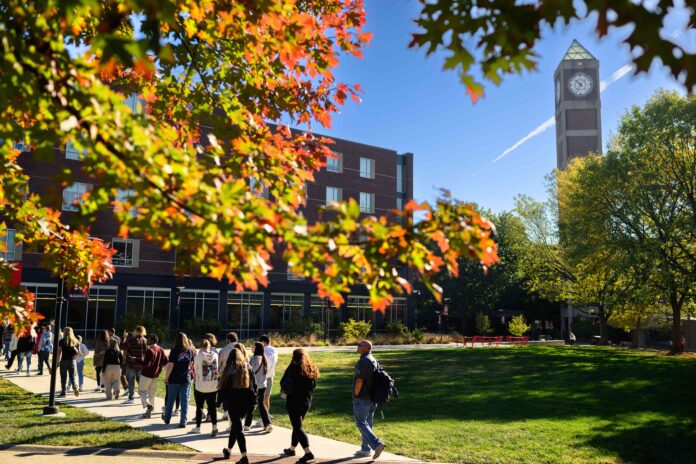
The Louisville native was introduced to the Upward Bound Summer Bridge program as a junior in high school, marking the first time he ever stepped foot onto a college campus.
“The program gave me the confidence that I needed to say, ‘Yes, I can see myself doing this’,” he said.
And for Craig, that meant paying it forward. Once he graduated high school, he worked as a tutor and mentor with the middle schoolers who visited campus as part of the Youth Towards Excellence program.
From there, Craig continued to work with Upward Bound high school participants from 1997 until he graduated from UofL with his bachelor of arts degree in English in 2001. He brought his involvement full circle when he returned again to work with Upward Bound youth after earning his teaching certificate. Even today, he maintains relationships with students he taught and mentored decades ago.
A community invested in student success
Three decades earlier, Mary Thorpe was a counselor who helped Craig and his parents through the logistical maze of financial aid applications, scholarships and loans. Craig said she and other counselors were instrumental in sharing information, knowledge and the pathway opportunities.
Today, as director of UofL’s TRIO programs, Thorpe is still there, providing experiences that help students recognize the potential within themselves.
“’Every student who enters our program is capable of extraordinary achievement,” Thorpe said. “We want our students to understand that higher education is attainable and that they belong in those spaces.”
For 50 years, TRIO has represented the best of the University of Louisville’s commitment to opportunity, access and community impact,” said Douglas Craddock, vice president for Community Engagement and interim vice president for Access and Opportunity. “When students begin to see college as a place where they belong, we are witnessing the kind of transformation that changes not only individual lives, but entire families and communities.”
Craig earned his bachelor’s degree in English from UofL in 2001 and continued his education, completing a master of arts in Pan African Studies in 2006, a master of arts in teaching in 2007, and a master of arts in school counseling in 2015. After many years as an educator and school counselor, he returned to what he calls his ‘home away from home’ and completed his doctorate of education degree in 2026.
He now works with the Louisville Teacher Residency at JCPS, a program responsible for teacher recruitment, preparation and retention, a building block to provide support for teachers in the district.
“It’s probably the most fun that I’ve had since I was in the classroom first starting out because I get to have conversations about mentorship in teaching and the benefits of seeing our students grow and develop,” he said.
Craig still attributes his inspiration to become an educator to his early experience with Upward Bound, a place where he said he had access to “those teachers who really cared.”
“All of the pieces of my life have come into place to where I’m doing something that I love and enjoy and that also has meaning and purpose,” Craig said.
According to Craddock, one of the most inspiring aspects of the program is to see entire families celebrate educational milestones together.
“When one student succeeds, the impact ripples outward. Younger siblings see new possibilities, parents gain confidence navigating higher education, communities gain future leaders,” he said. “That’s the true power of this work.”