















The University of Louisville has received a new federal designation and funding for its physician-scientist training program, placing it among top MD-PhD training programs across the United States. The designation will enable the UofL School of Medicine to amplify the program’s curriculum and increase the number of physician-researchers trained to bridge laboratory research and patient care.
The National Institutes of Health (NIH) has designated UofL’s MD-PhD program as a Medical Scientist Training Program (MSTP), which includes $2 million in funding over five years. The designation places UofL’s program among 58 elite programs of more than 120 dual-degree clinician-scientist programs in the nation.
“This is a tremendous milestone for us, and we’re especially proud to be the first institution in Kentucky to receive this distinction,” said Jeffrey Bumpous, executive vice president for health affairs and dean of the UofL School of Medicine. “In Kentucky, the need for physician-scientists is particularly profound, given the high burden of cancer, obesity, chronic disease and other health issues among Kentuckians. This designation will help us prepare more and even higher caliber physician-scientists who are uniquely qualified to advance health care and improve outcomes for Kentuckians.”
Physician-scientists earn both a medical doctor (MD) degree and a research doctorate (PhD), giving them expertise to accelerate the path of new therapies and technologies from the lab to the bedside, where they can improve health and well-being for people everywhere. Over its 25-year history, the UofL MD-PhD program has prepared physician-scientists for careers in academic medicine, biomedical research, clinical innovation and leadership.
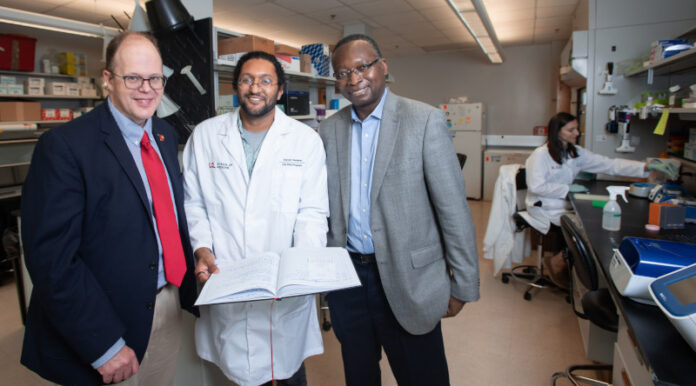
“The MSTP award acknowledges the quality and caliber of our program’s students, faculty, research environment, mentoring and integrated medical and graduate training, while also providing sustained federal support,” said Maxwell Boakye, co-director of the MD-PhD program and professor and chief of spinal neurosurgery. “By enhancing the national visibility and competitiveness of the UofL program, the MSTP designation also has the potential to improve our ability to recruit exceptional students.”
The funding will benefit students directly, supporting stipends, tuition, fees and other training-related expenses, thereby diminishing financial barriers to completion. Funds also will support enhanced program curriculum and mentor training, along with additional community-engaged research and entrepreneurial opportunities.
In addition, networking and career development opportunities available through the MSTP designation, such as program meetings and collaboration with other top physician-scientist training programs, will further position UofL’s graduates for competitive residency, fellowship and faculty positions.
Program leaders estimate these resources will allow the School of Medicine to increase the seven- to eight-year program’s enrollment from 24 to 40 over the next five years.
“The ultimate goal of our program is to ensure that we train physician-scientists who continue to pursue careers conducting high-quality research and clinical care, maximizing the value of their dual-degree education for the benefit of society,” said Kenneth Palmer, program co-director and professor of pharmacology. “MSTP designation allows us to provide outstanding training for even more students who will lead medical progress for decades to come and contribute to improved health for all.”
Steven Nadakal, a current student in the research portion of the MD-PhD program, said the MSTP designation validates the quality of UofL’s training.
“It’s definitely a federal stamp of approval that UofL is a research powerhouse,” Nadakal said. “The MSTP designation really means that we are among the best when it comes to research output and clinical output and we’re really trying to do good medicine and science, not for our own sakes, but for the community’s sake at large.”
Recognized by the Carnegie Foundation as both a Research 1 and Community Engaged university, UofL possesses exceptional infrastructure to provide both basic science and community-relevant research. Nadakal’s research to develop protocols characterizing where HIV lives in the DNA of infected people is an example of work that benefits from engagement with the community. His team is part of an organization that checks in regularly with HIV patients to ensure medical research aligns with their needs.
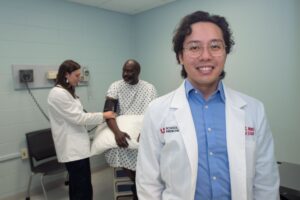
Daniel Nguyen, a student entering his final year of the MD-PhD program, said UofL already offers high quality training deserving of the MSTP label.
“The MSTP designation formalizes a program that has been operating at that standard for the past few years,” Nguyen said. “Its success is built on many things, including the sheer number of research opportunities offered. However, the strongest component of UofL’s program is its integrated approach to student training. Students maintain clinical exposure through graduate school and research continuity throughout their medical training, so the transition from one environment to the other isn’t a cold start.”
The NIH’s defined goals for the MSTP program are to help ensure that a pool of highly trained scientists is available in appropriate scientific disciplines to address the nation’s biomedical, behavioral and clinical research needs.