






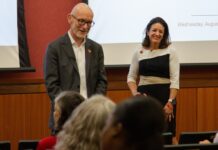


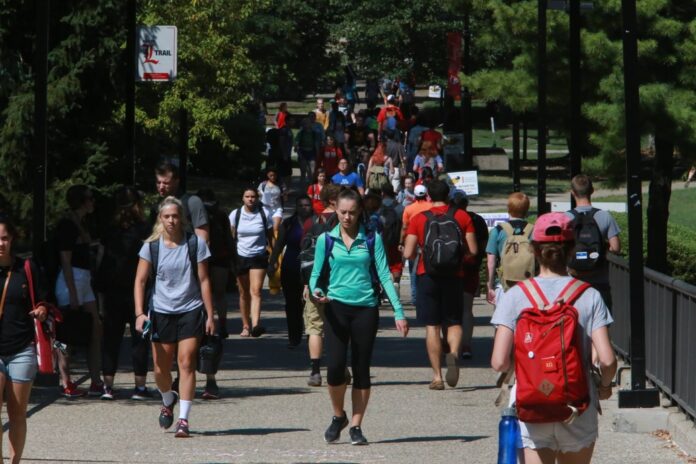
University of Louisville remains committed to creating an environment where students, faculty and staff thrive personally and professionally – a priority that President Gerry Bradley continues to champion. To drive this goal forward, Bradley launched the UofL Presidential Commission on Culture, Climate and Well-being (CCCW) this past fall.
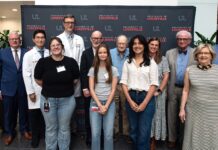
As a strategic driver for institutional improvement, the CCCW advises the university president on policies, planning and actions that advance a campus environment where all individuals feel respected, valued and empowered. About 80 people from a cross-section of the university comprise the CCCW.
“UofL thrives as the thousands of people who work and learn here thrive,” Bradley said. “We don’t want our mission and vision statements or our Cardinal Principles to be just nice words. We want those words to ring true with everyone in our community.”
The commission’s first order of business was to conduct a comprehensive assessment of UofL’s current climate, culture and well-being by reviewing data from recent climate and trust surveys. In some cases, subject matter experts were invited to speak to the commission as members strengthened their understanding of what needed the most attention. Adding Katie Partin, director of institutional effectiveness in the Office of Academic Planning and Accountability, to the CCCW leadership team also brought integration with the university’s strategic planning efforts and ensured the commission’s work would find places to integrate.
This semester, the members organized their work into six key areas that warrant the most attention. Each member was assigned to one of the following subcommittees:
- Communication and Transparency
- Compensation and Career Development
- Physical Safety and Facilities
- Policy and Culture
- Psychological Safety and Well-being
- Workload and Morale
Over the course of several weeks, the entire CCCW met to discuss overarching issues, and the subcommittees met to develop recommendations for the president to consider for inclusion in the Igniting Potential, Shaping Tomorrow 2026-30 Strategic Plan. That phase of the work was completed on March 23, and a final written report with the commission’s recommendations will be provided to the president by May 1.
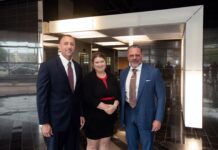
Commission Co-chairs Dwayne Compton and Brian Buford, as well as Vice-chair Lindsey Ronay, provide regular updates to Bradley and Executive Vice President/University Provost Katie Cardarelli.
“President Bradley and Provost Cardarelli are fully committed to this effort. We see that first-hand in our meetings with them,” Buford said. “We bring the commission’s questions, concerns and requests to them, and they address each issue thoughtfully and thoroughly.”
Compton adds that the CCCW’s work is taking place at just the right time – when UofL and higher education in general face tough challenges and make tough decisions about academic, operational and budgetary concerns.
“There have definitely been a lot of hard but authentic conversations in our CCCW meetings,” Compton said. “You can’t deny the CCCW’s passion for its work. You also can’t deny our senior leadership’s commitment to this difficult but important effort.”