




















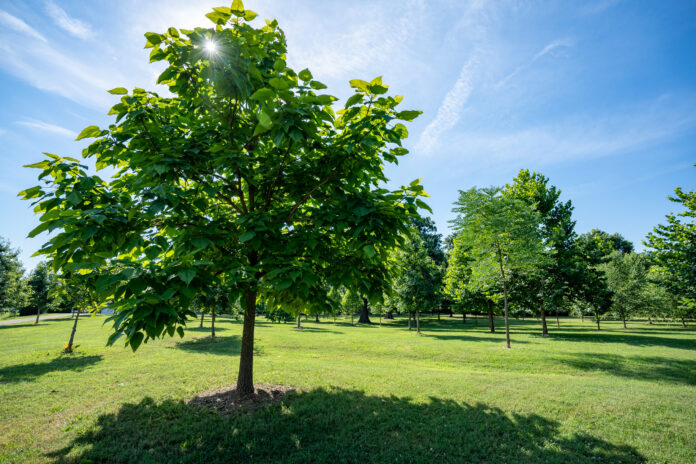
University of Louisville researchers have discovered that people who live in areas with more trees and shrubs have lower levels of certain immune cells in their blood. This may indicate specific biological health benefits from living in greener neighborhoods.
In a study published online first last month in the journal Environmental Research, researchers compared blood samples of people participating in the Green Heart Louisville Project. The researchers found that people living in greener neighborhoods showed immune patterns consistent with lower chronic inflammation, including lower levels of several circulating immune cells linked to inflammatory activity, such as monocytes, natural killer cells, B cells and some white blood cell types.
“The study also found evidence of a shift toward a more regulated immune profile, suggesting that nearby trees and vegetation may do more than improve quality of life – they may also influence the body’s immune system in ways that support cardiovascular health,” said Daniel Riggs, assistant professor in UofL’s Christina Lee Brown Envirome Institute and first author of the study. “While the study cannot prove cause and effect, the findings add to growing evidence that greener residential environments may be an important public health resource for reducing inflammation and promoting long-term health.”
The findings provide additional support for preliminary findings announced in 2024 from the Green Heart Louisville Project showing that people living in neighborhoods where the number of trees and shrubs was more than doubled had lower levels of a blood biomarker of inflammation than those living outside the planted areas. Those living in the greened area had 13-20% lower levels of high-sensitivity C-reactive protein (hsCRP) than those living in the areas that did not receive additional trees and shrubs. Higher levels of hsCRP are strongly associated with a risk of cardiovascular disease. Higher CRP levels also indicate a higher risk of diabetes and certain cancers.
The recent study evaluated the immune function of Green Heart Louisville Project participants based on the greenness of their residential environment prior to the addition of trees for the project.
“These studies show that greener neighborhoods don’t just look better; they appear to educate our immune system in ways that may reduce chronic inflammation and disease risk,” said Aruni Bhatnagar, director of the Envirome Institute. “They align with the Envirome Institute’s mission of identifying environmental conditions that shape human health and translating those insights into strategies for improving the health of our communities.”
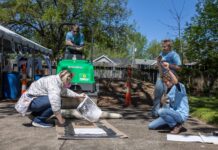
UofL launched the Green Heart Louisville Project in 2018 in partnership with The Nature Conservancy, Washington University in St. Louis, Hyphae Design Laboratory and others to study whether and how living among more densely greened surroundings contributes to better heart health.